Friday, February 24, 2017
Protest picket line in Tuscaloosa where Senator Richard Shelby's office is located.
February 24, 2017. The second of weekly protests until Alabama's Senator Shelby holds a town hall meeting for his constituents instead of only meeting with his business friend donors.

Sunday, July 3, 2016
Understanding Exposure - A Review
Understanding Exposure, How to Shoot Great Photographs with Any Camera, Fourth Edition, by Bryan Peterson
– A Review

I started taking photographs 40 years
ago and while I am not a professional photographer, I did sell a few
shots and I had a month-long exhibit at one point. I didn't make the
transition to digital photography so I quit shooting for over a
decade. When I finally began shooting digital photography last year,
I decided to actually re-learn what I was doing. I took a
comprehensive photography course for the first time in my life. It
was my good fortune to get a review copy of Bryan Peterson's book
during the time I was learning about photography in the classroom
setting. Being able to read his book during that time truly enhanced
my photography education.
Bryan Peterson's conversational writing
style invites the reader to learn without struggling. This is the
fourth edition of this volume and with this edition comes all new
photographs. Peterson has also added a section on flash photography,
adding even more value to the book. Each section has suggestions for
exercises to do so you get experience with the concepts Peterson is
illuminating. Even though I was taking a photography course at the
time, I found the exercises in this book to be quite helpful in
reinforcing what I was learning through the text as well as in class.
I like this book so much that when I
was taking notes, either for writing reviews or for my own personal
education, instead of underlining or highlighting on the pages, I
actually took photographs of the passages I wanted to highlight. I
didn't want to mark up the book at all. I highly recommend this
volume for any photographer who is learning or re-learning your art, and I thank the author and publisher for
the free review copy.
Sunday, May 1, 2016
He Wanted the Moon – A Review

He Wanted the Moon – The Madness and Medical Genius of Dr. Perry Baird and His Daughter's Quest to Know Him
– by Mimi Baird with Eve Claxton
In this unforgettable
book, Mimi Baird finds her father through personal and professional
writings, and later a few key interviews, and shares him with us.
This book is part biography and part autobiography. It is an
intimate look at a life of manic and depressive swings in a brilliant
physician living in an age of arcane mental health practices.
This book is disturbing,
heartbreaking, and educational. It is important. It is about a
woman looking for a connection with her estranged father and finally
finding it through his handwritten manuscript for a book about mental
illness and treatment.
The first half of He Wanted the Moon is dedicated to the manuscript of Dr. Baird, himself
(with some prudent editing by Mimi Baird and Eve Claxton as noted in
the author's note at the beginning). It is a fascinating look at
manic depressive psychosis (now called bipolar disease) through the
eyes of the patient, who also happens to be a world-renown physician
who was on the cusp of a medical breakthrough for his own disease.
We learn a great deal from Dr. Baird's narrative – how he felt,
what he was thinking, how he was treated by friends and family, and
the common treatments for mental illness at the time.
In 1944, there were no
pharmaceutical treatments available to treat manic depressive
psychosis. And during the manic stages of the disease, barbaric
treatments such as straight jackets, insulin-induced comas, among
other means, were the norm for controlling the patients until they
became more stable. Dr. Baird described one such barbaric treatment,
the cold pack, in such vivid detail that I could feel my own anxiety
level rise as I imagined being trapped in the pack. My calf muscles
twitched in protest on behalf of Dr. Baird.
In the late 1940's, 55% of
all hospital beds were occupied by psychiatric patients. With
patients, families, and doctors desperate for hope, the lobotomy was
introduced as the cure. Over the years, roughly 50,000 Americans had
the brain surgery that in most cases left the patient brain damaged
and unable to care for themselves. Dr. Baird had his
emotions-severing lobotomy in 1949.
The other half of the book
deals with Mimi Baird's decision to find out what happened to her
father when she was just a young girl and her attempts to learn about
the man who mysteriously vanished from her young life and essentially
never came back.
Her mother, who divorced
her father in 1944 and quickly remarried, was unwilling to discuss
the matter of Mimi Baird's father with her so there was a
decades-long void in her life. Years later, it was a serendipitous
conversation with an aging physician who had known Dr. Baird that
opened the door for Mimi Baird to begin peeking into his life in
earnest.
Anyone interested in
history, medical history, mental health history, or virtually any
subject in the realm of social sciences, should definitely read this
book. I would also recommend it to anyone with a friend or family
member with mental illness. Whether we realize it or not, we
probably all know someone with bipolar disorder (manic depressive
psychosis).
At the risk of sounding cliche, I was going to say this book needs to be adapted for the
screen. And then I remembered that I'd read there is a film in the
making. I look forward to being that person who says, “the book
was so much better than the movie.”
I wish to thank the author and publisher for the advance reader's copy of He Wanted the Moon.
Saturday, April 2, 2016
The Rooftop Growing Guide - A Review
The Rooftop Growing Guide: How to Transform Your Roof into a Vegetable Garden or Farm

As
co-founder and head farmer of Eagle Street Rooftop Farm in Brooklyn,
Annie Novak knows what she's talking about in The Rooftop Growing
Guide. If you have a usable rooftop, you can turn it into a garden.
The
best thing about The Rooftop Growing Guide (RGG) is that it's not
just for people who are growing on the roof. This book is packed
with information with illustrative photographs and narrative
examples. I've been gardening for 15 years and yet, there is always
more to learn. This book is my newest favorite “tool” for my
gardens.
Many
of the principles set forth in RGG are suitable for ground gardening,
raised bed gardening, container gardening, or balcony gardening as
well. Novak discusses such universal general gardening topics as
soil, lighting, seeds and seedlings, irrigation, compost, tools,
pests, fertilizers, and greenhouses. But she gets into details that
many gardening books lack. One such example is using a camera to
determine the amount of light your potential garden area gets.
Of
course, this is a rooftop garden guide, so there are also topics
specific to rooftop endeavors, such as assessing the location,
planning, legal issues, structural issues, and the micro-climate.
Throughout the book, Novak features several real life rooftop gardens
to show the reader what they are aspiring to achieve.
Although
Annie Novak is a professional farmer, she presents the RGG in such a
way as to not alienate the novice gardener. But the ideal candidate
for this book would be someone who has at least some basic knowledge
about gardening simply due to the volume of information presented.
Counting the index, this book is 245 pages. The amount of useful
information contained therein is incredible – there is not a wasted
word, photograph, diagram, or sidebar. This is a how-to book that is
not filled with words for the sake of words.
I
highly recommend this book to any and all who tend gardens or small
farms. And I recommend the book in physical form, as opposed to
electronic form. The physical book itself is a joy to hold and
peruse. It's a hefty over-sized paperback with colorful glossy pages.
This is the kind of book that you want a physical copy. The
electronic copy will suffice, but the physical copy will delight.
I'm glad I have both.
You can buy The Rooftop Growing Guide here.
I
wish to thank the author and Ten Speed Press for the free advance
reader copy.
Saturday, March 12, 2016
The Fold, by Peter Clines - A Review
The Fold
by Peter Clines

Peter
Clines' TheFold
will grab you from the start and not let go until the finish. I was
really looking forward to reading this book but once I had it in
hand, I didn't have time to get to it for two weeks.
Once I IDID get to it, everything else be damned! This book is an
exceptional science-fiction thriller.
Mike
Erikson teaches high school kids but he was built to do more. He was
recruited by an old friend to take on a fascinating summer job. His
job as a DARPA consultant was to check out the “Albuquerque
Door,” a portal of sorts that will transport a person from point A
to point B almost instantly. His assessment would help his friend justify budgeting the
necessary funds to continue the project.
The
people who staff the project are less than forthcoming about what it
does and how it works. And after the last DARPA consultant returned,
he apparently went mad. But Mike is uniquely qualified to figure
things out using his high IQ and eidetic memory.
This
book grabs you quickly and then moves so far, so fast without you
really even noticing until you're faced with monsters! Let it take you along through the mind-bending
twists and turns and see where you land.
This
is really fun science fiction. It's the kind of story that will have you saying, "oh my god" and "oh wow," out loud as you're reading. Take this trip. It's totally safe.
I highly recommend this book. It was great fun!
Many
thanks to the publisher and author for the advance reader copy.
Saturday, February 6, 2016
MARS ONE - A Review
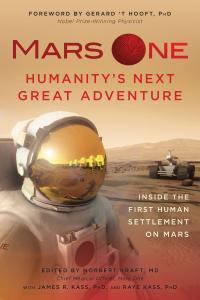
MARS ONE: Humanity's Next Great Adventure: Inside The First Human Settlement On Mars
-- Norbert Kraft, James Kass, Raye Kass
Science
fiction or fact?
I've
never been one to dwell on mortality but I must say this book got me
thinking it would be nice to live well into the future in order to
see what we do and where we go as a species. And if the Mars One
Project has things their way, we'll be colonizing Mars in short
order.
“Imagine
. . . what it would be like to live on another planet, millions of
miles from Earth, and look up into the night sky, knowing that one of
the 'stars' is actually the planet on which you were born.”
Really.
Imagine it.
We
are told that in 2013, nearly 250,000 people applied to the Mars One
Project to make the one-way trip to become Mars colonizers. In the
back of the book, however, we're told, “the total number of fully
and correctly completed applications was 4,227.”
The
Mars One Selection Committee whittled that number down to just 100.
In 2016, the pool will be further reduced to 24 participants (12
women and 12 men). It is members of that selection committee who
provided the essays in this enthralling anthology.
Interspersed
throughout are quotes from Mars One applicants offering tidbits of
insights into what those potential pioneers are thinking.
One applicant said, “for the longest time, all I ever wanted to be
was an astronaut. I wanted to sail through the inky black unknown
and land, explore, and survive on a place like Mars.”
This
collection of essays covers a wide range of topics, beginning with
the need for skills. The plan is to send four people to Mars and then
four more, every 26 months. It's pretty obvious that those people
will need to have a wide range of skills but one of the most
important traits will be the ability to innovate. To hack what you
have. To think creatively.
“Your instinct for innovation will settle the solar system.”
The
essays address sociological and psychological issues such as personal
differences (age, race, ethnicity, religion), leaving everything and
everyone behind, group dynamics, building a society, and even the
potential legal issues with colonizing another planet.
The
essays also deal with the impact of being under constant surveillance
by the world – because The Mars One Project includes plans for
reality television that will document the rest of the selection
process, with the remaining candidates being recorded throughout
their training (presumably, the next ten years). It's even possible
that those trainees will have their gall bladders and appendixes
removed prophylactic-ally sometime in the next ten years to lessen the
possibility of needing acute surgery on Mars (all astronauts will be
trained in basic medical and dental procedures but they'd like to avoid major surgery).
The
authors say that their program won't be the typical reality
television show. Since I've never really watched much reality
television, I won't be able to judge that. But the authors add,
“participants will rank the order, at the end of each selection
day, of the three teammates with whom they want to continue.”
And,
“the reward for the winners will not be money, but further
education and training . . .”
There
are also two pieces of short fiction based on the Mars One Project
long-term plans, as well as details about the 100 current trainees –
demographic statistics and professions.
The
book doesn't cover any hard science. Yes, the authors tell us that
water will be pull out of the soil and that the settlers will grow
their own food and create their own fuels by splitting molecules of
water. (As a gardener, I find it difficult to believe they will get
enough calories for four people out of 861 square feet of garden
space.)
But
what about getting there? So far, there is no rocket capable of
flying to Mars. And there are plenty of naysayers (including a group
at M.I.T.) when it comes to this project. So is it science fiction
or fact? Time will tell. As one Mars One applicant said, “whether
or not this project succeeds, it has done so much already in sparking
interest.”
One
very telling line of the book to me is this, “enabling the ability
to imagine life on Mars, so as to properly prepare for it, is the
most important project the Mars One organization is currently engaged
in.” You have to first imagine it. I recommend you start with
this book.
I
wish to thank BenBella Books,Inc. for the electronic Advance Reader's Copy of Mars One:Humanity's Next Great Adventure.
Subscribe to:
Posts (Atom)